

Overview
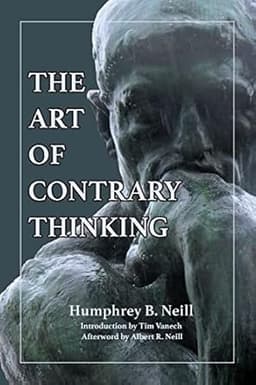
Humphrey B. Neill’s The Art of Contrary Thinking is a slim book with an outsized idea.
“When everyone thinks alike, everyone is likely to be wrong.”
~ Humphrey B. Neill
That line gets quoted often, usually with a slightly smug undertone, as if contrarianism were simply a matter of doing the opposite of whatever the crowd is doing. Buy when others sell. Sell when others buy. Stand alone and feel superior.
Neill’s version is quieter than that.
Contrary thinking, as he describes it, is less about defiance and more about discipline. It is a habit of pausing when consensus feels comfortable. A refusal to equate popularity with truth. It is not a trading trick. It is a posture toward ideas.
The Crowd and the Individual
Neill begins with a blunt observation: crowds are emotional. Individuals have the capacity to reason.
That does not mean individuals always reason well. It means they can, if they choose to. Crowds, once formed, tend to move by momentum. Gossip hardens into fact. Opinion becomes certainty. Headlines become conviction.
You see it in markets. You see it in politics. You see it in technology cycles. Optimism spreads socially. So does fear.
Neill does not argue that the crowd is always wrong. In fact, he concedes that the public is often right during established trends. The mistake tends to occur at the extremes, when enthusiasm or despair becomes nearly unanimous.
If you have spent time watching markets during a boom or a panic, you can feel that shift. The tone changes. Doubt disappears. Or hope does. Conversation narrows. Nuance fades. What remains is a shared emotional current.
Contrary Thinking Is a Process, Not a Position
One of Neill’s most important clarifications is that contrary thinking is not reflexive opposition.
It is not waking up each morning and asking what the consensus view is, then automatically betting against it.
It is slower and more deliberate.
You begin with the consensus. You try to understand it properly. You let it make its case. Then you ask a second question.
What if the opposite were true?
That question does not force action. It simply forces inspection.
If everyone is certain that rates will fall, what must already be priced in?
If the narrative says a company is unstoppable, what could derail it?
If the press is uniformly pessimistic, what has already been discounted?
Neill is careful not to overpromise. Contrary opinion is not a timing device. Extremes can persist. Being early feels indistinguishable from being wrong.
Contrarianism, in his framing, is more of a filter. It reduces the chance that you will be swept away.
The Habit of Independent Thought
There is a section in the book that feels especially relevant now.
Neill argues that most opinions are second-hand. People absorb them from newspapers, conversations, and the prevailing tone of the day. Few sit quietly and examine what they actually believe.
Original thought begins in solitude.
That idea stayed with me more than any specific market advice. In a world of constant feeds and commentary, solitude is rare. You can consume information all day and still never form an independent judgment.
I have noticed how easy it is to adopt the tone of whatever environment you are immersed in. During crypto booms, everything sounds transformative. During downturns, everything sounds fraudulent. If you do not step back deliberately, your thinking adjusts without you noticing.
Contrary thinking requires space. It requires a willingness to be briefly uncomfortable. It often means holding a view that does not yet have social reinforcement.
That is harder than it sounds.
The Money-Minded Minority
Neill distinguishes between the crowd and what he calls the “money-mind.”
The money-mind does not merely react. It evaluates. It looks at sentiment and asks whether the reaction is proportionate. It considers probabilities rather than stories.
This resonates with something I have learned slowly. Markets reward narrative in the short term. They reward calibration over the long term.
There was a period when I mistook enthusiasm for insight. If a theme was compelling enough and widely repeated enough, it began to feel self-evident. Later, I swung too far in the other direction and became reflexively skeptical of anything popular. Neither posture was especially helpful. The harder task is to separate emotional intensity from underlying reality.
The money-mind is skeptical, but not cynical. It listens without being hypnotized. It questions without assuming superiority.
There is humility in that.
Practical Prompts
Neill offers simple prompts for cultivating this habit:
- Suppose the opposite is true. What follows?
- If everyone is optimistic, what risks are being minimized?
- If everyone is pessimistic, what strengths are being ignored?
- What would have to happen for the consensus to be wrong?
These are not predictions. They are guardrails.
Even asking the question changes your posture. You become less eager to join the chant, whether it is bullish or bearish.
Extremes and Climax
Neill returns repeatedly to the idea that the crowd is most vulnerable at climaxes.
At market tops, bullishness feels obvious and safe. At bottoms, pessimism feels rational and justified. In both cases, the emotional intensity itself becomes information.
The practical implication is uncomfortable. You may have to trim positions when everything feels strong. You may have to lean in when headlines are bleak.
That does not mean acting recklessly. It means recognizing that unanimity is often a late-stage condition.
As he suggests in essence, it pays to be contrary when it pays to be right. The wording may be clumsy. The logic is durable.
The Risk of Performative Contrarianism
There is a subtle danger in adopting the identity of “contrarian.”
Once you see yourself as someone who stands apart, it becomes tempting to oppose consensus reflexively. That, too, is a form of conformity, just inverted.
Neill’s work, read carefully, cautions against this. Contrary thinking is a tool, not a personality. It is meant to sharpen judgment, not replace it.
Sometimes the crowd is correct. Sometimes the trend is justified. Sometimes the obvious answer is simply the right one.
The discipline lies in asking the second question without feeling compelled to dramatize the answer.
Who Should Read It
The Art of Contrary Thinking is not a technical manual. There are no valuation models or economic forecasts.
What it offers instead is a mental habit.
For newer investors, it provides a defense against euphoria and despair. For more experienced ones, it acts as a reminder that sentiment is always present, even when unacknowledged.
Beyond markets, it is a book about intellectual independence in a world that quietly nudges you toward agreement.
Final Thoughts
I do not read Neill as encouraging rebellion. I read him as encouraging reflection.
Pause before adopting the popular view. Examine your own enthusiasm. Notice when certainty becomes universal.
“Doubt all before you believe anything.”
~ Sir Francis Bacon
Contrary thinking, at its best, isn't dramatic. It is simply the habit of asking one more question than anyone else in the room is asking.
It does not guarantee you will be right. It just makes it less likely that you will be carried along without noticing.